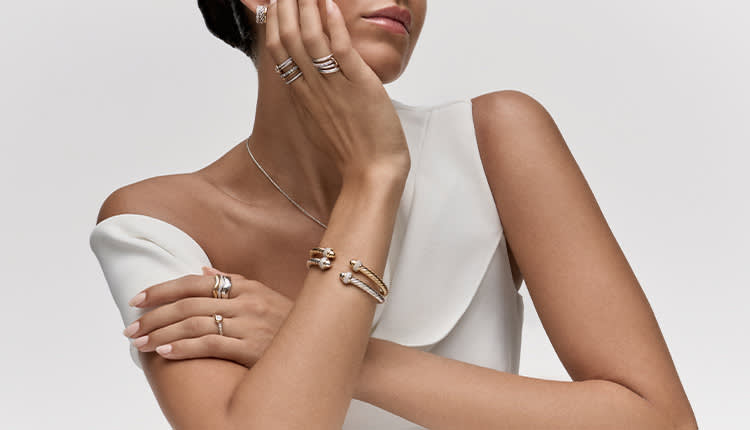
The creation of a truly exceptional piece of fine jewellery is among the most complex and time-consuming of all the luxury crafts. From the initial design concept to the finished piece, a significant jewel from one of the world’s great houses may require hundreds of hours of skilled work by craftsmen who have spent decades mastering their art.
The Great Jewellery Houses
Cartier — Paris
Founded in Paris in 1847, Cartier is the most celebrated jewellery house in the world. The house’s client list has included every European royal family, generations of Hollywood royalty and the world’s most celebrated collectors. Cartier’s most iconic designs — the Love bracelet, the Juste un Clou, the Panthère — have become cultural landmarks that transcend fashion and remain as relevant today as when they were first created.
The house’s high jewellery collection — presented annually at a private event for the world’s most important clients — represents the pinnacle of Cartier’s creative and technical capabilities. Pieces in the high jewellery collection are produced in strictly limited quantities, with the finest examples incorporating gemstones that have taken years to source and match.
Van Cleef & Arpels — Paris
Van Cleef & Arpels is celebrated above all for the invention of the Mystery Set — a technique developed in 1933 in which gemstones appear to float without visible settings, their pavilions slotted into an invisible rail system concealed within the mount. The technique requires extraordinary skill and patience, with a single Mystery Set piece requiring hundreds of hours of work by the house’s most experienced setters.
The house’s Alhambra collection — inspired by the four-leaf clover and introduced in 1968 — has become one of the most recognisable and enduring designs in luxury jewellery, produced in mother of pearl, onyx, turquoise and precious stones.
Bulgari — Rome
Bulgari brings an Italian sensibility to fine jewellery — bolder, more architectural and more colourful than the French tradition. The house’s Serpenti collection — featuring the snake motif that has been central to Bulgari’s identity since the 1940s — and its Tubogas work, inspired by the flexible gas pipe, represent a distinctly Roman approach to jewellery design.
Bulgari’s use of coloured gemstones — particularly its signature combinations of emeralds, rubies and sapphires set against yellow gold — creates jewels of extraordinary chromatic intensity that are immediately recognisable as the work of the Roman house.
Graff — London
Laurence Graff has built the most celebrated diamond house of the modern era — a London-based operation that controls the supply chain from rough diamond purchase to finished jewel. Graff’s ability to acquire the world’s finest rough diamonds — including some of the largest and most exceptional stones ever found — and to cut and set them to the highest possible standard has made the house the first choice for collectors seeking the world’s most extraordinary gemstones.
The Crafts of Fine Jewellery
Setting
The setting of gemstones is the most technically demanding of all jewellery crafts. The setter’s role is to secure each stone precisely within its mount — whether a classic claw setting, a pavé of tiny diamonds or the complex rail system of a Mystery Set piece — without damaging the stone or disturbing adjacent gems. A single complex piece may contain hundreds of individually set stones, each requiring precise placement.
Engraving
Hand engraving — the incising of decorative patterns into metal using steel gravers — is one of the oldest jewellery crafts and one of the most difficult to master. The finest engravers work under magnification, cutting intricate patterns into gold or platinum with a precision and control that takes years to develop.
Enamel
Champlevé and cloisonné enamel techniques — in which powdered glass is fused into recessed cells cut or formed in metal — produce colours of extraordinary depth and translucency that cannot be achieved by any other means. The finest enamel work, such as that produced by Fabergé in the late 19th century, remains technically unmatched today.
Investing in Fine Jewellery
The finest signed jewellery from the world’s great houses has demonstrated consistent appreciation over long time periods, driven by the combination of material value, craftsmanship and the cultural significance of the maker’s name. Christie’s, Sotheby’s and Phillips hold dedicated jewellery sales in Geneva, New York and Hong Kong twice yearly — providing a liquid market for exceptional pieces.
For the serious collector, the key principles are provenance, condition and documentation. A piece with its original box, papers and auction history commands a significant premium over an identical piece without documentation.
Safarelite curates the world’s finest luxury jewellery and lifestyle experiences. Browse our Jewellery & Watches collection for exclusive partner offers and premium listings.
DE: Dieser Beitrag enthält Affiliate-Links. Wenn Sie über diese Links kaufen, erhalten wir eine Provision – für Sie entstehen keine Mehrkosten.
EN: This post contains affiliate links. We may earn a commission if you purchase through these links, at no extra cost to you.