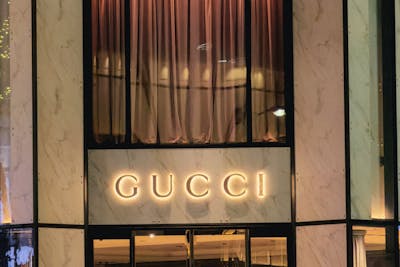
In the history of luxury fashion, few houses have experienced the creative turbulence and the commercial extremes of Gucci. The Florentine house — founded by Guccio Gucci in 1921 as a leather goods shop — has been reinvented multiple times across its century of operation, each reinvention producing a creative moment of extraordinary cultural impact and commercial consequence.
In 2026, with Demna — formerly of Balenciaga — installed as Creative Director following Alessandro Michele’s departure in 2022, Gucci is in the middle of what may be its most consequential creative transition since Tom Ford’s transformation of the house in the 1990s.
The Gucci Heritage
Guccio Gucci founded his leather goods business in Florence in 1921, inspired by the fine luggage he had observed during his years working as a lift operator at the Savoy Hotel in London. The equestrian references that defined the early Gucci aesthetic — the horsebit, the green-red-green web stripe — reflected the Florentine tradition of luxury leather craft and the English country house aesthetic that Gucci had absorbed during his London years.
The house’s expansion through the 1950s and 1960s — driven by the patronage of the international jet set who discovered Florence as a luxury shopping destination in the post-war years — established Gucci as one of Italy’s first genuinely international luxury brands and the GG monogram as one of the most recognised luxury symbols in the world.
The Tom Ford Era
Tom Ford’s appointment as Creative Director in 1994 — and his transformation of a house that had been commercially and creatively compromised by years of family conflict and management dysfunction — is one of the most celebrated creative turnarounds in luxury fashion history. Ford’s Gucci — explicitly sexual, glamorous and modern in a way that the Italian luxury establishment found shocking and international buyers found irresistible — produced some of the most discussed collections of the 1990s and restored the brand to a commercial and cultural prominence that it had not achieved for decades.
The Alessandro Michele Era
Alessandro Michele’s appointment in 2015 — and his subsequent transformation of Gucci from a Tom Ford-era glamour house into the most discussed and most culturally referential luxury brand in the world — produced another extraordinary creative chapter. Michele’s maximalist, gender-fluid, historically promiscuous approach generated collections of extraordinary cultural richness that dominated the luxury fashion conversation for seven years and drove revenue growth that made Gucci the most commercially significant brand in the Kering portfolio.
The Demna Chapter
Demna’s arrival at Gucci in 2024 — following his decade at Balenciaga, where he established himself as one of the most provocative and most culturally engaged designers working in luxury fashion — represents the third great creative transformation in the house’s modern history.
Demna’s approach at Gucci — which has engaged directly with the house’s heritage while bringing the conceptual intelligence and the cultural provocation that defined his Balenciaga work — has attracted both the critical attention and the commercial scrutiny that every major Gucci transition generates. The first collections have been praised for their ambition and their willingness to engage with the house’s extraordinary legacy without being constrained by it.
The GG Monogram
The Gucci GG monogram — applied across the house’s leather goods, ready-to-wear and accessories in the distinctive interlocking pattern that has been one of luxury fashion’s most recognised motifs for decades — has undergone a series of creative reinterpretations under successive creative directors that have kept it contemporary while maintaining its fundamental identity.
For the collector, the GG monogram pieces represent one of the most liquid categories in the luxury accessories secondary market — immediately recognisable, consistently in demand and available across a wide range of price points that makes the Gucci universe genuinely accessible.
The Verdict
Gucci in 2026 is the luxury fashion house at the most interesting and most closely watched creative moment in its recent history. Demna’s vision, the house’s extraordinary creative legacy and the commercial infrastructure of the Kering group make it one of the most compelling and most culturally significant propositions in contemporary luxury fashion.
Explore Gucci’s current collections and discover Florentine luxury at its most creatively ambitious and most culturally engaged.
DE: Dieser Beitrag enthält Affiliate-Links. Wenn Sie über diese Links kaufen, erhalten wir eine Provision – für Sie entstehen keine Mehrkosten.
EN: This post contains affiliate links. We may earn a commission if you purchase through these links, at no extra cost to you.